How to Brew Pour Over Like a Japanese Café
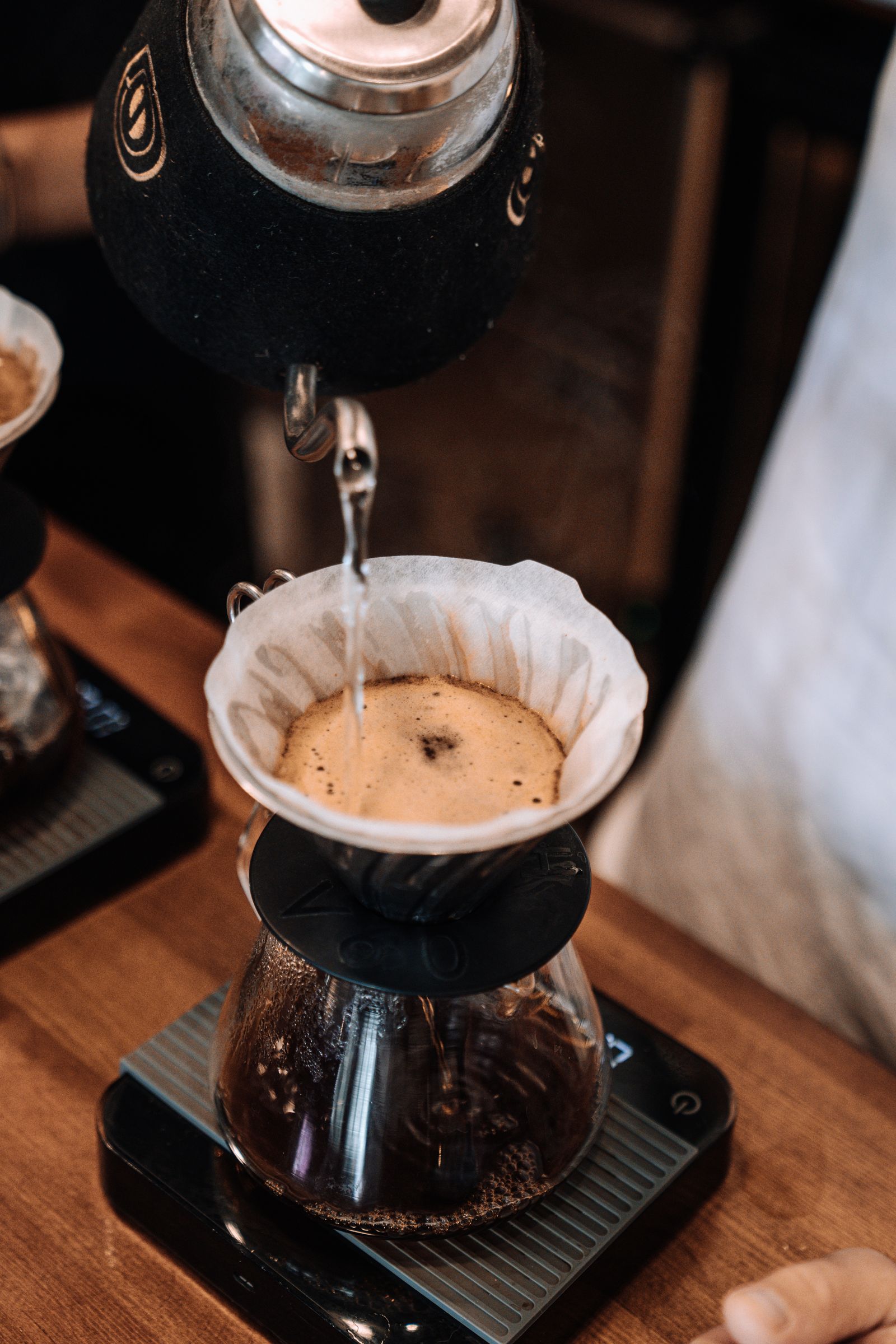
You've got a Hario V60, fresh beans, and a decent grinder. You follow a recipe to the gram. And yet the cup never quite tastes like the one you had at that little café—clean, sweet, almost glassy, with none of the harsh edges you get at home.
Here's the thing: the gear usually isn't the problem. What separates your kitchen brew from a café cup is how you pour. Japanese café baristas treat the pour as the whole craft—they keep the kettle low, pour slow, stay centered, keep it continuous, and they don't stir. This article breaks that technique down into steps you can actually repeat at home.
If you want the full picture—what Japanese pour over is, which drippers to choose, ratios, iced versions, the whole landscape—start with our complete guide to Japanese pour over coffee. This article goes the other direction: it's a deep dive into the pour itself.
This is for you if you already own a V60 or Kalita Wave, you brew regularly, and you still can't get that café-level clarity in the cup.
Why a Japanese Café Pour Tastes Different
The difference isn't magic, and it isn't just "they care more." It's a set of specific, repeatable movements—and once you understand the reasoning behind them, you can copy them.
At the heart of it is kodawari—an uncompromising pursuit of getting one small thing exactly right. In a traditional kissaten (a classic Japanese coffee house, often decades old, where coffee is brewed one cup at a time by hand), the master might spend several minutes on a single cup, pouring with the quiet focus of someone doing delicate work. The cup isn't a transaction. It's treated as a single, complete event. If you want the cultural backstory, here's the kissaten tradition behind this style.
But don't let that romance distract you—the point is practical, not mystical. The one contrast that matters most is this: a Japanese café pour is slow and controlled, where a lot of Western home brewing is fast and aggressive. That fast, splashy approach dumps energy into the coffee bed, stirs up the grounds, and pulls out harsh, uneven flavors. The slow, controlled pour does the opposite—it keeps the bed calm and the extraction even, which is exactly what gives you that clean, sweet clarity. The rest of this article is just unpacking how to do that.
Before You Pour: Dial In These 4 Variables
The pour is the star here, but it can't fix bad inputs. Before you worry about technique, get these four things in a reasonable range. We'll keep it brief—for the full equipment and ratio breakdown, head to the complete Japanese pour over guide.
Grind Size
Grind is the single biggest lever on clarity. Aim for medium-fine—roughly the texture of table salt.
What matters even more than the exact setting is consistency, which is why cafés use a quality burr grinder, not a blade grinder. Uneven grounds extract unevenly—some over, some under—and that muddies the cup. If your brew drains too fast and tastes weak, go a little finer. If it stalls and tastes harsh, go coarser.
Ratio
Start at 1:15 to 1:16—that's 1 gram of coffee for every 15 to 16 grams (mL) of water. For a single cup, try 20 g of coffee to about 300–320 g (10–11 oz) of water.
And weigh it—don't guess. A small kitchen scale is the cheapest upgrade you can make to a pour over. Eyeballing scoops is how two "identical" brews come out completely different.
Water Temperature
Use water around 195–205°F (92–96°C). Hotter water extracts faster and more aggressively; cooler water pulls more gently. A common café adjustment: for darker roasts, drop slightly toward the lower end (around 195°F / 90°C) so you don't scorch out bitterness, and push toward the top of the range for lighter roasts.
If you're brewing without a thermometer, take water off a boil and let it sit for about 30–45 seconds. If you want real control over temperature—and the slow, steady stream the rest of this article depends on—a variable-temperature gooseneck kettle is the one piece of gear worth the upgrade. A model like the Fellow Stagg EKG is a popular choice for exactly this reason.
Fresh Beans
Use beans that have rested a few days past their roast date and, ideally, are used within about 2–3 weeks—and grind them right before you brew. Here's a free freshness test: a big, puffy bloom (more on that below) means the beans are fresh and still releasing CO2. A flat, lifeless bloom means they're past their best—and no pouring technique will rescue a stale cup. Cafés are obsessive about roast dates for exactly this reason.
Step 1 — The Bloom: Ride It, Don't Rush It
The bloom is the first, short pour—just enough water to wet all the grounds—followed by a brief pause. Fresh coffee is full of trapped CO2, and that gas pushes water away and blocks even extraction. The bloom lets it escape first, so the real pour can soak the bed evenly.
Here's how a café does it:
- Pour gently in the center, using about twice the weight of your coffee in water (so ~40 g for 20 g of coffee).
- Aim to wet all the grounds without flooding them. A small dip, or center divot, in your dry grounds before you start helps the water spread evenly.
- Then wait 30 to 45 seconds. Watch the grounds swell into a dome and release bubbles. This is what it means to ride the bloom—you let the gas finish escaping instead of forcing the process.
Resist the urge to stir or swirl it into submission. That patience is the whole philosophy in miniature: you're not rushing, because rushing trades away sweetness and clarity. Give the coffee its moment, and the rest of the brew gets easier.
Step 2 — The Pour: Low, Slow, Centered, Continuous
This is the heart of it. Four principles, and a reason behind each—because once you know why a café pours this way, you stop fighting the technique.
Low. Keep the kettle spout close to the coffee bed, just an inch or two above the rising water. A high pour drops with force, agitates the grounds, and carves channels where water rushes through without extracting evenly. Low and close keeps the bed calm.
Slow and continuous. Pour a thin, steady, thread-like stream—not the fast, splashy gush you might be used to. This is the exact opposite of the aggressive, fast Western pour. Remember, a kissaten master might take several minutes on one cup. The slowness isn't a flaw or wasted time; it's the point. A gentle stream extracts evenly and keeps the bed undisturbed.
Centered, in concentric circles. Start with a small circle in the center, spiral gently outward, then spiral back to the middle. Don't pour directly onto the filter wall. Water that runs down the edge slips past the grounds without extracting them (that's "bypass"), and it tastes thin and weak.
No stirring or swirling. In the traditional café approach, you let the grounds settle into an even layer and fall through cleanly, without churning them up. A calm, undisturbed bed extracts more evenly than an agitated one.
An honest note: "Japanese pour over" is not one fixed rulebook. Plenty of modern baristas—and the popular Kasuya 4:6 method—use distinct pulse pours and even some agitation, and they make excellent coffee. What we're describing here is the traditional, controlled café pour, which is the cleanest place to start. For how the 4:6 method and other approaches fit into the bigger picture, see the complete Japanese pour over guide.
Putting it together (the main pour): After the bloom settles, pour up to your target weight in 2 to 3 steady additions, always in that low, slow, centered stream. Keep the water level fairly consistent—pour to refill the bed, let it sink a bit, pour again—rather than flooding it all at once. For a 20 g brew, that means working up to around 300–320 g (10–11 oz) of total water by roughly the 2:00 mark, then letting it draw down.
Step 3 — The Drawdown & Timing
After your final pour, do nothing. The drawdown is the last phase, where the remaining water filters through the bed. Don't poke it, don't swirl it, don't help. Let it finish on its own.
When it's done, look at the bed. A flat, even surface of spent grounds is the café's quiet signal that the extraction was even—water moved through the whole bed at the same rate. A bed with deep craters or high walls of grounds means the pour channeled somewhere.
For total brew time, aim for roughly 2:30 to 3:30 on a V60 (from the first drop of bloom water to the last drip). Traditional café-style and darker-roast brews often run longer. Don't chase the clock—it's a guide, not a target. If you remember nothing else, remember that the slowness is intentional. You're trading speed for sweetness.
As for the gentle swirl some brewers do at the end to level the bed: the traditional café approach keeps that to a minimum, or skips it. If you do it, do it lightly.
Troubleshooting: Why Your Cup Isn't Café-Clean Yet
Most home-brew problems trace back to one of a few things. Here's how to read the cup and fix it:
| Problem | Likely cause | The fix |
|---|---|---|
| Bitter, harsh, drying | Grind too fine · water too hot · brew too slow | Grind coarser · drop temperature a few degrees · speed up slightly |
| Sour, thin, weak | Grind too coarse · water too cool · pour too fast | Grind finer · raise temperature · pour slower and more evenly |
| Channeling (water tunnels down the edge) | Poured onto the filter wall · kettle held too high | Keep your pour centered · hold the kettle low and close |
| Stalls (drains too slowly) | Grind too fine · too many fines (dust) | Coarsen the grind · rinse your filter before brewing |
Notice that almost every fix points back to the same handful of habits from Steps 1–3: stay centered, keep the kettle low, pour slowly and evenly, and dial the grind. Get those right and most problems disappear on their own.
Frequently Asked Questions
Do I need a gooseneck kettle to pour like a Japanese café?
You don't strictly need one, but it's the single most helpful tool for this style. A gooseneck spout gives you the slow, thin, controlled stream this whole technique depends on—something a regular kettle simply can't do. If you only upgrade one thing, make it this.
Why don't Japanese baristas stir the coffee?
In the traditional café approach, the goal is an even, undisturbed bed of grounds that extracts uniformly. Stirring agitates the grounds and can cause uneven extraction and a muddier cup. The control comes from the pour itself, not from stirring.
How slow should I pour?
Slow enough to keep a thin, steady stream and never flood the bed. As a rough target, work up to a full cup over a few additions across about two minutes of pouring—far gentler than a fast Western pour. Watch the water level: pour to refill, let it sink, pour again.
How long should a café-style pour over take?
Roughly 2:30 to 3:30 total on a V60, including the bloom. Traditional and darker-roast brews can run longer. Treat it as a guide—the slowness is intentional, not something to rush past.
Is this the same as the 4:6 method?
No. The 4:6 method (from Tetsu Kasuya, the 2016 World Brewers Cup champion) uses distinct, measured pulse pours and is its own approach. What we describe here is the traditional, continuous café pour. Both are "Japanese pour over"—the style isn't one single rulebook. For how they compare, see the complete Japanese pour over guide.
Can I use a Kalita Wave instead of a V60?
Yes. The technique—low, slow, centered, continuous—is the same. The Kalita's flat bed and three small holes drain a little differently and are more forgiving of pour speed, so your timing may shift slightly. For a full dripper comparison, see the complete Japanese pour over guide.
The Takeaway
A café cup isn't a secret recipe—it's a handful of deliberate habits: pour low, pour slow, stay centered, keep it continuous, and let the bed settle instead of stirring it. That's what produces the clean, sweet clarity you taste at the counter. None of it is hard, but all of it takes practice—your hands will get steadier and your stream more even every time you brew.
When you're ready to go wider, read the complete Japanese pour over guide for gear, ratios, and the full style breakdown, or learn what a kissaten is for the culture this technique grew out of.
This article may contain affiliate links. If you buy through them, we may earn a small commission at no extra cost to you.