Japanese Pour Over Coffee: The Complete Guide
Some links below are affiliate links. We may earn a commission at no cost to you. As an Amazon Associate we earn from qualifying purchases.
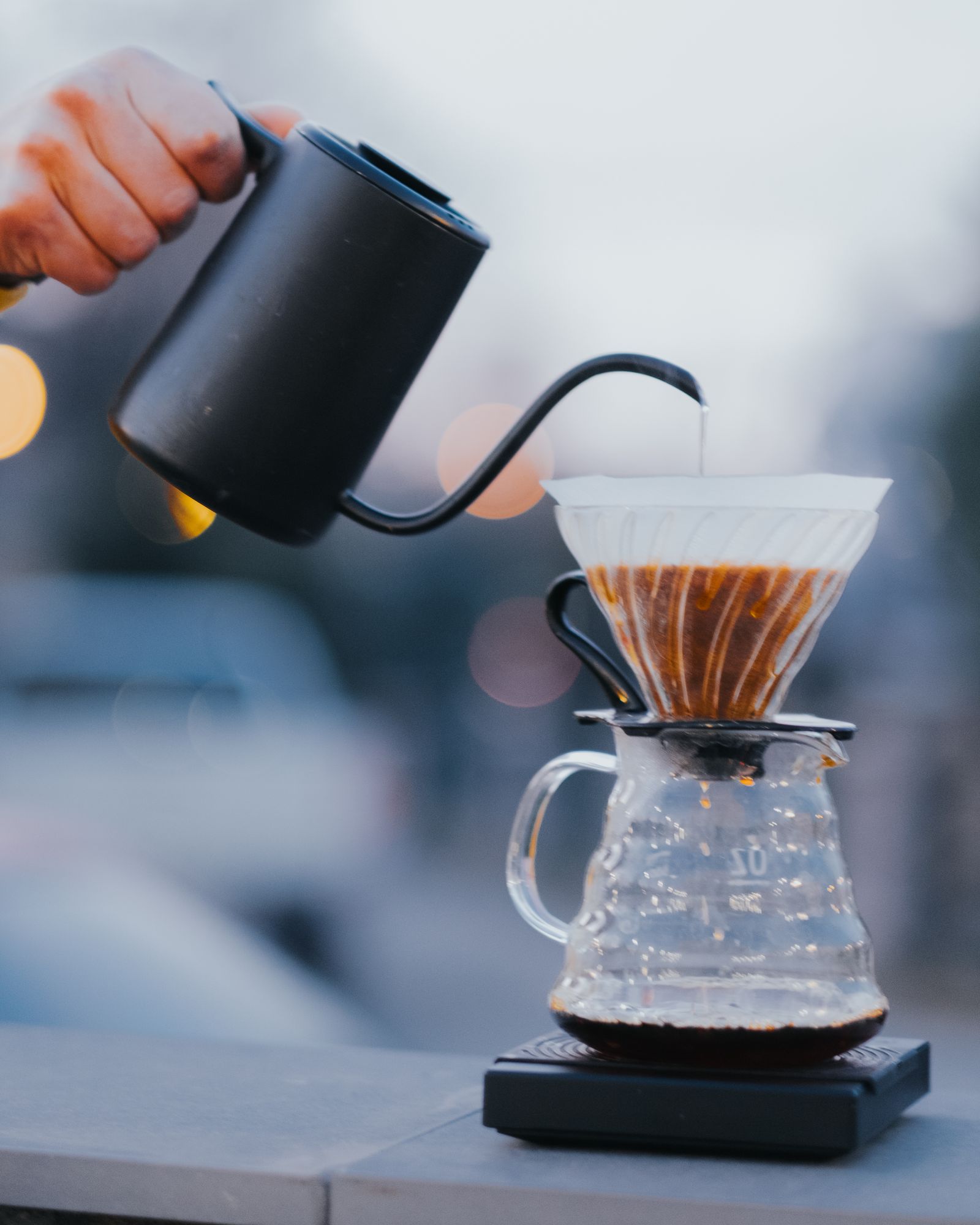
Japanese pour over coffee is, at its heart, a single quiet idea: pour slowly, pour gently, and let the coffee do the work. You hold a gooseneck kettle low over the bed, send a thin stream of hot water into the center, let the grounds bloom, and resist the urge to stir or swirl. The payoff is a cup that's clean, sweet, and largely free of the harsh, muddy notes that come from over-agitating your coffee.
If you already own a Hario V60 — or you're eyeing one — this guide is for you. It's the method that turned Japanese drippers into the quiet standard on specialty coffee bars from Portland to Berlin, and it's far easier to pull off at home than it looks.
Here's what we'll cover:
- What Japanese pour over actually is, and where it came from
- How it differs from the Western pour over style you've probably seen on YouTube
- The gear you need (and what you can skip)
- A step-by-step recipe you can brew today
- Japanese iced coffee, the V60, nel drip, and the kissaten culture behind it all
A quick note on where we're coming from: we're a Japan-based team, so the dripper, the kettle, and the café down the street are close to home for us. We'll keep the cultural detours short and the practical stuff front and center.
This guide contains affiliate links. As an Amazon Associate and through other partner programs, we earn from qualifying purchases — at no extra cost to you. We only recommend gear we'd actually brew with. Learn more.
What Is Japanese Pour Over Coffee?
Japanese pour over is a manual brewing method built around a cone- or wave-shaped dripper, a paper filter, and a slow, controlled pour of hot water. In Japan it's usually just called hand drip (ハンドドリップ) — the everyday term for brewing a cup by hand, one pour at a time — and it's the backbone of the country's café and home-coffee culture.
The modern story really starts in 2005, when Japanese glassware maker Hario released the V60: a 60-degree cone with a single large hole and spiral ridges inside. It was simple, affordable, and endlessly controllable, and within a decade it had become a fixture on specialty bars worldwide. Two other Japanese designs round out the picture — the flat-bottom Kalita Wave, prized for consistency, and the versatile Origami dripper, a later favorite for its looks and flexibility.
What ties them together isn't just the hardware. It's a sensibility: precision over force, attention over speed, and a kind of respect for the single cup in front of you. That mindset runs deep in Japan's coffee shops — but more on that later.
Japanese vs. Western Pour Over: What's Actually Different?
Here's the short version: traditional Japanese pour over favors one slow, continuous pour with no stirring, while modern Western pour over tends to use multiple pulse pours and active agitation to control the extraction. Both make great coffee. They just get there differently.
This is the part most guides skip, so let's lay it out plainly.
| Traditional Japanese style | Modern Western style | |
|---|---|---|
| The pour | One slow, continuous stream into the center | Several distinct "pulse" pours |
| Kettle height | Held low, close to the bed | Often higher, more forceful |
| Pattern | Start small at the center, spiral outward gently | Cover the whole bed, sometimes pour around the edge |
| Agitation | Avoid stirring and swirling — "ride the bloom" | Stir the bloom and/or swirl to even out extraction |
| Pace | Slower, gentler, more deliberate | Faster, more hands-on management |
The Japanese approach treats the coffee bed as something delicate: you wet it gently, let it expand, and trust the slow flow of water to draw out sweetness without churning up bitterness. The Western approach — popularized by figures like Scott Rao, who advocates stirring the bloom and giving the slurry a swirl (the so-called "Rao spin") — treats extraction as something you actively manage to keep it even.
But here's the important caveat: don't assume "Japanese = always a single continuous pour." That's an oversimplification, and any experienced brewer will call it out. One of the most influential pour over recipes of the last decade — the 4:6 method — comes from Tetsu Kasuya, a Japanese barista who won the 2016 World Brewers Cup. And the 4:6 method is built entirely on divided pours: you split the water into a "4" portion (which controls sweetness and acidity) and a "6" portion (which controls strength), poured in distinct stages.
So the honest takeaway is this: Japanese hand drip isn't one rigid technique. It's a rich tradition that runs from the slow, meditative continuous pour of an old-school café to Kasuya's precise, competition-bred recipe. That range is exactly what makes it worth learning.
The Gear: What You Need for Japanese Pour Over
Heads up: some links below are affiliate links — buying through them supports our testing at no cost to you.
You need surprisingly little to start — and most of it you'll use for years. The trick is choosing each piece by the job it does, not by the brand on the box. Here's how to think about each one.
Dripper (V60 / Kalita Wave / Origami)
Your dripper shapes the whole brew. The three Japanese classics each have a personality:
- Hario V60 — A cone with one large hole. The most expressive and clear option — forgiving enough for beginners, yet rewarding as your technique improves. Great if you like to taste origin character; it does ask you to control your pour.
- Kalita Wave — Flat bottom, three small holes, a ridged "wave" filter. The most consistent and beginner-friendly — it evens out small pouring mistakes.
- Origami — A ribbed cone that works with both V60 and Wave filters. Versatile, photogenic, and a favorite for people who want one dripper to do everything.
That's the quick read. Which one is right for you is a longer conversation — see our ranked guide to the best Japanese pour-over drippers, with a buying link for each.
Gooseneck Kettle
This is the one piece of gear that genuinely matters for Japanese pour over. A gooseneck kettle has a long, narrow, curved spout that lets you pour a thin, slow, precise stream exactly where you want it — which is the entire foundation of the method. A regular kettle dumps water too fast and too wide to control.
If you want to dial in temperature too, a variable-temperature electric gooseneck (like the Fellow Stagg EKG) takes the guesswork out. If you're happy checking temperature yourself, a quality stovetop gooseneck does the job beautifully.
→ Check the Fellow Stagg EKG on Amazon
Grinder, Scale & Filters
Three supporting players, each worth a sentence:
- Grinder — Grinding fresh, right before you brew, is the single biggest upgrade to your cup. A burr grinder set to medium-fine is the target.
- Scale — A 0.1 g scale with a timer lets you brew the same great cup twice. Coffee is a recipe; you need to measure it.
- Filters — Use the filter made for your dripper: V60 cone filters for the V60, Wave filters for the Kalita, and either for the Origami. The wrong filter changes how water flows.
Not sure where to start? A complete starter-kit guide is on the way, and our head-to-head dripper ranking is live — for now, the gear above is everything you need.
How to Brew Japanese Pour Over: Step by Step
Here's a complete, beginner-friendly recipe that gets you a clean, sweet cup. It's everything you need to brew today.
The basics:
- Ratio: about 1:15 to 1:16 (coffee to water) — e.g., 20 g coffee to 300–320 g water (a little under 11 oz)
- Water temperature: about 195–205°F (90–96°C)
- Grind: medium-fine, like table salt
- Total brew time: roughly 2:30–3:30
The steps:
- Weigh and grind. Measure your coffee (20 g is a friendly starting point) and grind it medium-fine.
- Rinse the filter. Set the filter in the dripper and pour hot water through it. This removes any papery taste and warms your cup. Discard the rinse water.
- Bloom (30–45 seconds). Add the grounds, level the bed, and pour just enough water to wet everything — about twice the weight of the coffee (so ~40 g water for 20 g coffee). The bed will swell and release CO₂. This is the bloom. Let it sit.
- Pour slow, from the center. Begin a thin, steady stream right in the center, then spiral outward in small circles and back. Keep the kettle low. Pour in a controlled way until you hit your target water weight.
- Don't stir. Resist the urge to stir or swirl. Let the water and gravity do the work — this is the heart of the style.
- Let it draw down. Let the dripper drain fully, give your cup a gentle swirl, and drink.
Three common mistakes to avoid:
- Pouring around the rim. Water that runs down the sides skips the coffee. Stay in the center.
- Over-agitating. Heavy stirring or aggressive pouring churns up bitterness.
- Water too hot or poured too fast. Both scorch and over-extract. Slow, and a touch below boiling, is the sweet spot.
The Hario V60 Method (Japan's Most Popular Pour Over)
If there's one dripper to start with, it's the Hario V60 — the most searched-for, most written-about pour over device in the world, and the one most Japanese baristas reach for. The recipe above works perfectly with it.
The V60's single large hole means you control the flow with your pour, which is what makes it so expressive. Start with the 1:15 ratio above. When you're ready to level up, try Tetsu Kasuya's 4:6 method — the divided-pour recipe we mentioned earlier, designed specifically for the V60, that lets you tune sweetness and strength independently.
One quick practical note: V60s come in sizes (the small 01 and the larger 02). Most people are happiest with the 02, because it handles both single cups and two-cup batches.
Japanese Iced Coffee (Flash Brew): The Hot Pour, Chilled
There's one more method worth knowing, because it's a Japanese specialty and it's wonderful in summer: flash brew, also called Japanese iced coffee.
The idea is simple but clever. Instead of brewing cold (like cold brew, which steeps for hours), you brew hot coffee directly onto ice. You put ice in the carafe, brew your V60 right over it with hot water, and the coffee chills instantly as it drips. The key: the ice is part of your total water. You swap roughly a third to half of your brewing water for ice — so you brew a stronger, concentrated cup with the hot water, and the melting ice dilutes it back to normal strength instead of leaving you with a watery glass.
The result is bright, aromatic, and clean — flash brew locks in the delicate aromas that long cold steeping tends to mute. It's a different drink from cold brew entirely.
Beyond V60: Nel Drip & the Kissaten Tradition
Paper-filter pour over is only one branch of Japanese hand drip. The older, more romantic branch is nel drip (a slow, hand-poured method that uses a nel — a reusable cloth filter — instead of paper). The cloth lets more of the coffee's oils through, producing a famously rich, velvety, almost syrupy cup. It's the signature brew of the kissaten (喫茶店), Japan's traditional coffee shops — quiet, wood-paneled rooms, often playing jazz, where a master might spend several minutes drawing a single cup.
It's a reminder that Japanese coffee isn't just about gear and ratios; it's about a whole culture of care. If that world intrigues you, it's worth a proper visit.
Frequently Asked Questions
Is Japanese pour over different from regular pour over?
Yes and no. Traditional Japanese pour over uses one slow, continuous pour into the center with no stirring, while Western styles often use multiple pulse pours and active agitation. But the line isn't rigid — the famous 4:6 method is Japanese and uses divided pours. Both traditions aim for a clean, sweet cup; they just take different routes.
What grind size should I use for Japanese pour over?
A medium-fine grind, roughly the texture of table salt, is the standard starting point. Too fine and the brew runs slow and turns bitter; too coarse and it drains fast and tastes weak. Adjust from there based on your brew time.
What's the best dripper for beginners?
The Kalita Wave is the most forgiving, thanks to its flat bottom and slower, more even flow, which smooths out small pouring mistakes. The Hario V60 is more expressive but asks for a steadier hand.
Do I really need a gooseneck kettle?
For Japanese pour over, effectively yes. The whole method depends on a thin, slow, controllable stream of water, and a regular kettle simply can't deliver that. It's the one piece of gear we wouldn't skip.
Why don't you stir in Japanese pour over?
Stirring and swirling agitate the coffee bed, which can pull out more of the harsh, bitter compounds and make the cup taste muddy. The traditional Japanese approach trusts a gentle, even pour and gravity to extract sweetness cleanly — what brewers call "riding the bloom."
Is the 4:6 method Japanese?
Yes. The 4:6 method was created by Tetsu Kasuya, a Japanese barista who won the 2016 World Brewers Cup. It's a great example of how Japanese hand drip includes both slow continuous pours and precise divided pours — it isn't a single fixed technique.
Conclusion: Where to Go Next
Japanese pour over comes down to three things: a gooseneck kettle held low, a slow pour from the center, and the patience not to stir. Get those right and you'll brew a cleaner, sweeter cup than most café drip — at home, today.
From here, pick your path. For the technique itself, learn how to brew pour over like a Japanese café, or choose your gear with our ranked dripper guide. And if you'd like to understand the culture behind the cup, start with What is a kissaten?
Affiliate disclosure: As an Amazon Associate we earn from qualifying purchases. Some links in this article are affiliate links; if you buy through them we may earn a small commission at no additional cost to you. See our full affiliate disclosure and editorial policy.