Japanese Canned Coffee & Vending Machines, Explained
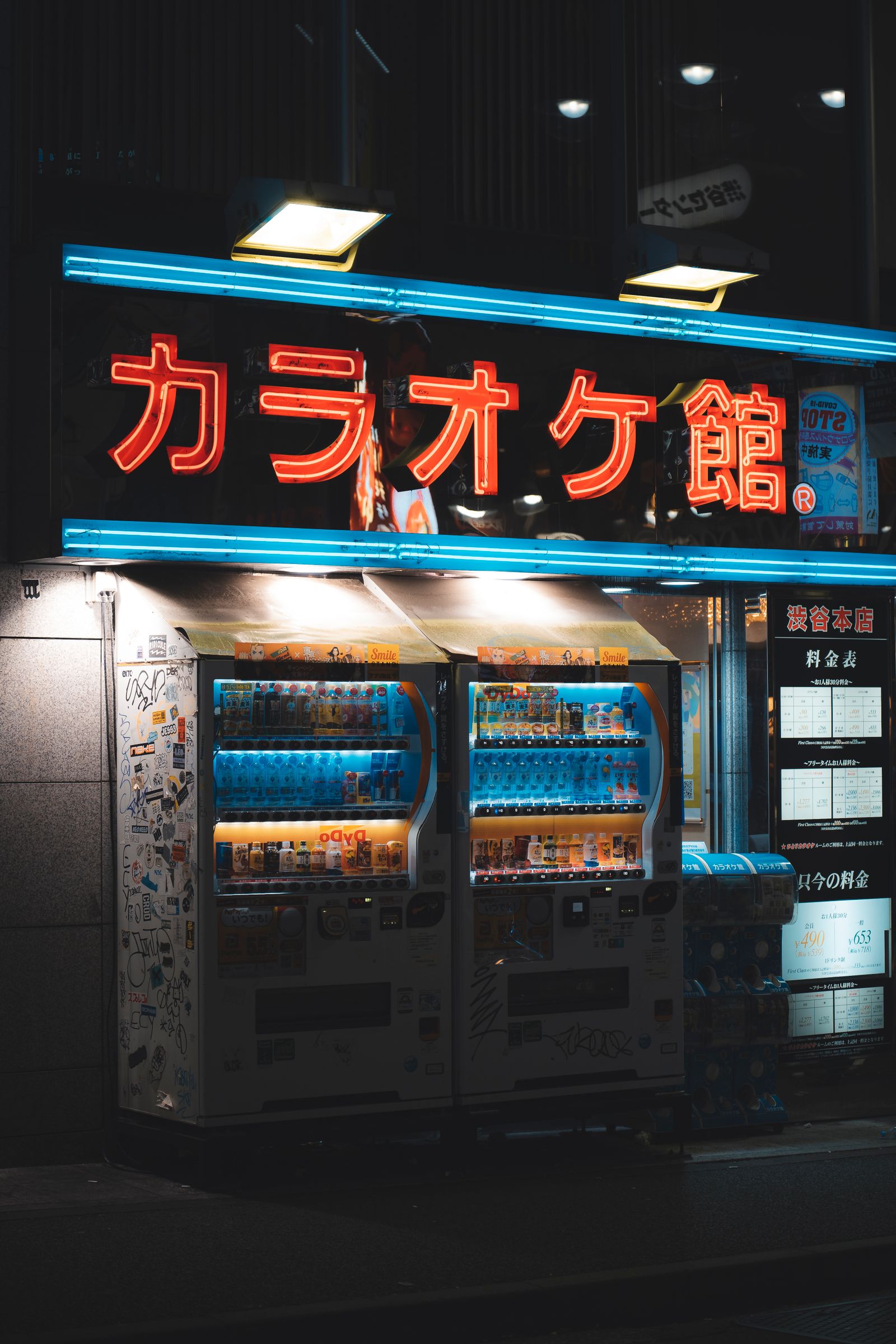
It's a cold night on a quiet street in Japan. You drop a couple of coins into a vending machine, press a button, and something clunks down into the tray. You reach in—and the can is hot. Not lukewarm. Hot enough to warm your hands while you walk.
For most American visitors, "a can of coffee" means something cold. In Japan, it's an everyday piece of infrastructure. Kan kōhī (缶コーヒー, "canned coffee") has been a fixture of daily life here for decades, and its stage is the vending machine—jidōhanbaiki (自動販売機), which stand on more or less every street in the country. This guide walks through where canned coffee came from, why vending machines turned it into a national habit, the brands you'll actually meet, the oddly famous ad culture around it, and how to enjoy it yourself as a traveler.
First, the Thing That Surprises Everyone: Hot Coffee From a Machine
Let's get straight to the part that stops visitors in their tracks. In Japan, a single vending machine often sells the same drink two ways at once: chilled and steaming. Look at the buttons and you'll see a small color code—a red label (atatakai, "warm") under the hot options, a blue one (tsumetai, "cold") under the chilled ones. Pick a red one in winter and the can that drops out is genuinely warm to the touch. People cradle it in their hands like a tiny radiator.
Why is this such a surprise? Because vending machines in the U.S. mostly dispense cold cans and bottles, and that's the whole mental model. In Japan, the machines are everywhere—train stations, back alleys, office lobbies, mountain trailheads—and they're built on the assumption that in cold weather you'll want something hot. The convenience isn't a novelty; it's the default.
Japan has the highest density of vending machines of any country in the world—by recent counts, roughly one machine for every 23 people. Whatever the exact figure in a given year, the lived experience is the same: you're rarely more than a short walk from a warm can of coffee.
A Quick History: Who Invented Canned Coffee?
The origin story starts with one Japanese company. UCC (Ueshima Coffee) is widely credited with launching the world's first canned coffee, "UCC Coffee with Milk," in 1969—a claim solid enough that Guinness World Records later certified the same product as the longest-selling ready-to-drink canned coffee brand. The idea has a nice bit of folklore attached to it: the founder, Tadao Ueshima, is said to have bought a coffee at a station, only to have his train pull out before he could finish it—an annoyance that supposedly sparked the thought of coffee you could carry, set down, and come back to. Whether or not the details are exact, the product that resulted was coffee you could pocket.
Canned coffee got a big visibility boost a year later, when Ueshima handed out free samples at the 1970 Osaka World Expo and sales took off. But the real turning point for the hot can came a few years after that: in 1973, Pokka co-developed a vending machine—with Sanden (then Sankyo Electric)—that could hold cans hot as well as cold. Once a single machine could serve both temperatures, the door was open for the vending culture that followed.
Why Vending Machines Made Canned Coffee a National Habit
Canned coffee didn't catch on in a vacuum. It caught on because the vending machine was there to carry it.
Ubiquity
Machines line the platforms of train stations, tuck into side streets, hum in office corridors, and turn up in genuinely unexpected places—beside a shrine, at the foot of a hiking trail, in a hot-spring town. Because the machines are everywhere, a can of coffee is always within reach. It becomes the thing you grab on the way to work, on the walk between meetings, on the pause before the last stretch of a climb.
Hot and cold in one machine
The hot-and-cold technology mentioned above is what made the habit stick through winter. Buying a warm drink from a machine, outdoors, in January, isn't remarkable in Japan—it's routine. That reliability wove canned coffee into the daily rhythm of commuting, working, and taking a breather.
A quality expectation
Convenience in Japan doesn't have to mean settling. Shoppers tend to expect a certain standard even from a canned drink out of a machine, and the major brands have kept refining their recipes over the years to meet it. The result is that "cheap and everywhere" and "perfectly drinkable" aren't at odds.
It's worth noting this is only one side of Japanese coffee. If canned coffee is the country's answer to convenience, there's an equally strong tradition on the other end—slow, hand-brewed, deliberate. For that side of things, see Japanese Pour-Over Coffee.
The Icons: A Field Guide to Japan's Canned Coffee Brands
Walk up to any machine or convenience-store cooler and you'll meet a handful of names again and again. Here's who's who.
- Georgia (Coca-Cola Japan) — one of the biggest and most familiar names in canned coffee, around since the 1970s and best known for its milky, sweetened classics. The safe, default choice.
- BOSS (Suntory) — pitched as the working person's companion, currently the top-selling canned coffee brand in Japan, and the star of the famous ad campaign in the next section.
- FIRE (Kirin) — a mainstay lineup on machines and shelves.
- Wonda (Asahi) — best known for its "Morning Shot," aimed squarely at the commute.
- UCC — the origin brand, still a staple on shelves today.
Sweet, milky, or black?
Here's the thing to know before you buy: most canned coffee in Japan is sweetened and milky by default. You'll see variations printed on the can—different sugar and milk levels, sometimes labeled with words like bitō (微糖, "lightly sweetened"). If you want it straight, look for mutō (無糖, "unsweetened") or simply "black," which is widely available. American drinkers who assume black is the norm should flip that expectation here: unless you choose otherwise, sweet is the standard.
The Suit-Wearing Celebrity Ad Culture
There's one more distinctly Japanese layer to canned coffee: its advertising. Brands here often sign big-name actors for long stretches and cast the humble can as something for grown-ups who work for a living—a quick lift between tasks, cracked open in a suit.
The best-known example is Tommy Lee Jones as "Alien Jones" for Suntory BOSS—a campaign running since 2006 in which the Oscar-winning American actor plays a deadpan extraterrestrial observing life on Earth by trying out one human job after another, from taxi driver to construction worker to sumo referee. It's now one of the longest-running celebrity campaigns in Japanese advertising history. The fun of it, for American readers, is the inversion: a Hollywood heavyweight who is, in Japan, simply the face of a coffee brand.
That casting isn't random. Canned coffee's core image has long been tied to the sarariiman (サラリーマン, "salaried office worker")—so the suit, the workday, and the between-meetings can all fit together into a single, tidy piece of advertising shorthand.
How to Enjoy It Like a Traveler
This is the part that pays off in person. Here's how to actually work canned coffee into a trip.
Using the machine
Most machines take coins, and many now accept IC cards—the tap-to-pay transit cards like Suica or Pasmo—so you can pay the same way you get on a train. Look for the color code: red under the hot options, blue under the cold. When in doubt, a can under a red label is the warm one. Press the button below your pick and listen for the clunk.
Where you'll find them
You'll spot machines at stations, along side streets, near shrines, at trailheads, and around hot-spring towns. Treat them as a reason to keep walking—a small can every time you stop to look around.
What to try first
If sweet isn't your thing, reach for a mutō/black. If you want to taste the mainstream, a Georgia or a BOSS is the classic starting point. None of this is a rule—half the fun is pressing a button you can't read and finding out.
A small ritual
On a cold day, there are few better small pleasures than pulling a hot can from a machine and walking on with it warming your hands. It's one of the quiet joys of a Japanese winter.
Canned coffee is the drink you take with you. When you want to sit down and stay a while, that's the domain of the kissaten (喫茶店), Japan's traditional coffee houses—see What Is a Kissaten?. And if you're curious about the leisurely breakfast sets many of them serve, there's Japanese "Morning Service" (Mōningu).
FAQ
Who invented canned coffee?
UCC (Ueshima Coffee) is widely credited with launching the world's first canned coffee, "UCC Coffee with Milk," in 1969—a product Guinness World Records later recognized as the longest-selling of its kind. Its origin story ties back to the idea of coffee you could carry and drink on the go.
Why does Japan have hot canned coffee in vending machines?
Two things came together: hot-and-cold vending machines, pioneered by Pokka in 1973, and Japan's dense, everywhere-you-look vending culture. Together they made a warm can from a machine an ordinary part of winter.
What's the most popular Japanese canned coffee brand?
BOSS (Suntory) is currently the top-selling canned coffee brand in Japan, with Georgia (Coca-Cola Japan) another household name; UCC, FIRE, and Wonda are also staples on machines and shelves.
Is Japanese canned coffee sweet?
Most of it is sweetened and milky by default, but unsweetened black (mutō) is widely available if you prefer it straight.
Canned coffee is Japan taking convenience seriously—engineered, ubiquitous, warm in your hand on a cold night. What makes it fun is that it lives in the same country as the slow, careful, hand-poured tradition of Japanese coffee. Two answers to the same question, side by side. Find a machine on your next walk, press a red button, and see for yourself. For the other side of the story, start with Japanese Pour-Over Coffee.