5 Common Pour Over Mistakes (and How to Fix Them)
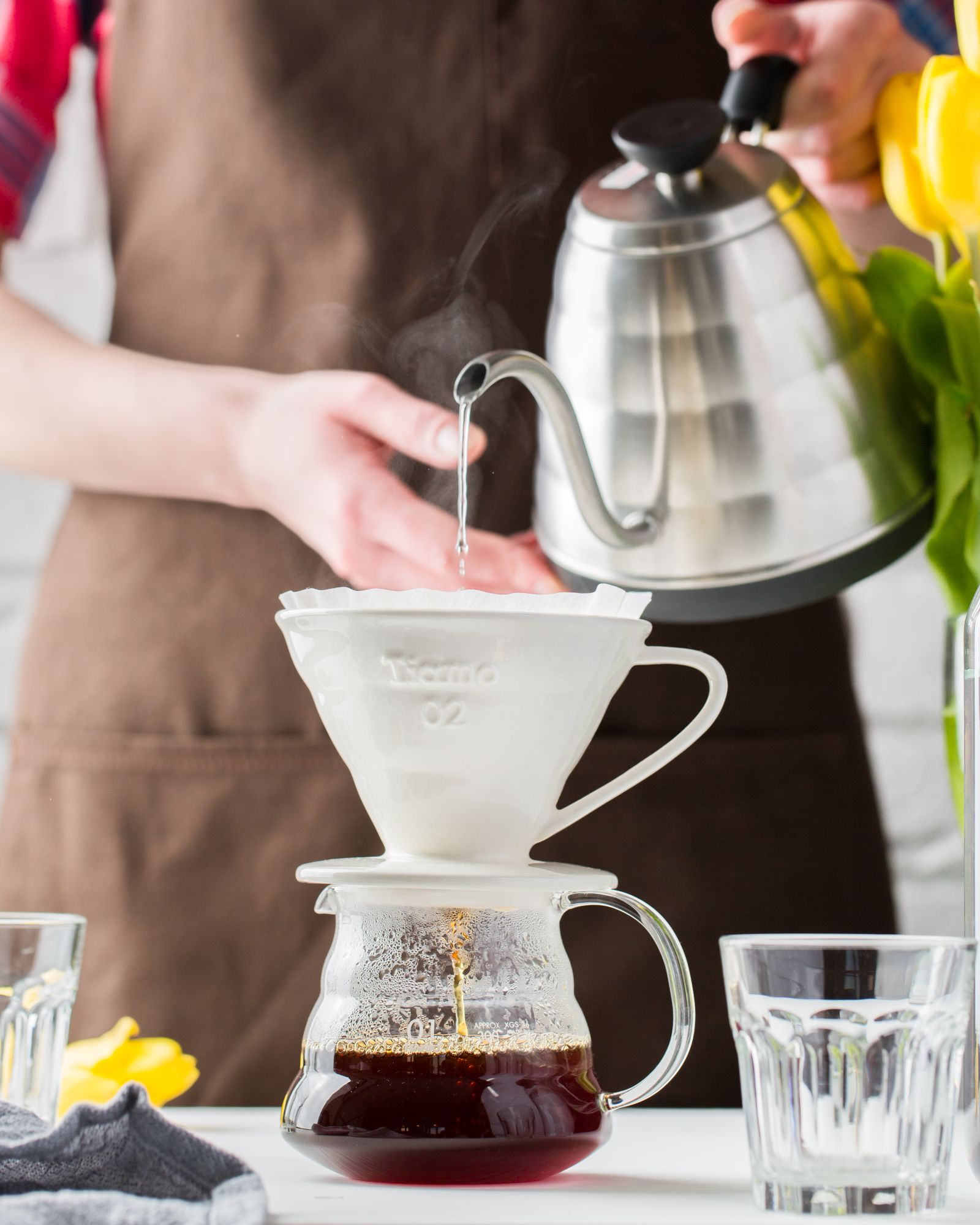
You're using the same beans and the same dripper you saw at the café, but your cup comes out bitter, sour, or thin—and theirs is clean and sweet. That gap almost never comes down to talent. It comes down to a handful of common pour over mistakes, and every one of them is fixable.
Here's the thing about a good Japanese café or kissaten (a traditional Japanese coffee house): the barista isn't performing magic. The cup is consistent because the same small steps happen the same way every time, so nothing is left to chance. Each potential mistake gets quietly closed off before it can ruin the cup. That's the whole idea behind this guide—we've turned that steady, repeatable routine into a diagnostic checklist you can run on your own coffee.
One note before we start: this isn't a recipe. We're not going to walk through exact grams, temperatures, or a pour schedule here—we're focused on what's going wrong and how to correct it. If you're brand new to the method, start with our complete guide to Japanese pour over, and when you want the actual technique, see how to brew pour over like a Japanese café.
First, Diagnose the Cup (Bitter, Sour, or Weak?)
Before you change anything, taste carefully. Coffee extracts in a rough order: the bright, acidic flavors come out first, then the sweetness and body, and the bitter, drying compounds come out last. So the flavor you're tasting is a clue about how far your brew went.
- If your cup is sour and thin, you probably stopped short—that's under-extraction.
- If it's bitter and harsh, you likely went too far—that's over-extraction.
- If it's just weak and watery without being sour, that's usually about ratio, not extraction.
Use the table below to go from a symptom to the most likely cause, and to the first thing you should touch.
| Your cup tastes… | Most likely cause | Fix first |
|---|---|---|
| Bitter, harsh, dry | Over-extraction: grind too fine / water too hot / brew too slow | Mistake #1 (grind), then #2 (temp) |
| Sour, sharp, thin | Under-extraction: grind too coarse / water too cool / brew too fast | Mistake #1 (grind), then #2 (temp) |
| Weak, watery (but not sour) | Ratio too wide / not weighing | Mistake #5 (ratio) |
| Flat, muted, no aroma | Skipped or rushed bloom / stale beans | Mistake #3 (bloom) |
| Sharp AND harsh at the same time | Channeling / uneven bed | Mistake #4 (pour) |
Now the single most important rule, and the one that keeps a café's cup consistent: change only one thing at a time. If you adjust your grind, your temperature, and your pour all at once and the cup gets better, you'll never know which change did it—and you can't repeat it. Fix one variable, brew again, taste. That patience is exactly what makes a café's coffee so reproducible.
If you want to understand the flavor side more deeply, our guide to coffee ratios explains how strength and extraction actually work.
Mistake #1 — Your Grind Is Off (Too Fine, Too Coarse, or Uneven)
Grind is the most powerful lever you have, which is why it's mistake number one. It controls how fast water flows through the bed and how much flavor it pulls out.
Grind too fine and water moves slowly, sitting on the grounds too long. You over-extract: the cup turns bitter and drying, and the brew is sluggish to drain. Grind too coarse and water rushes through. You under-extract: the cup comes out sour, thin, and drains too fast. And the sneakiest problem is an uneven grind—a mix of fine dust and coarse chunks, which is exactly what cheap blade grinders produce. The fine bits over-extract while the coarse bits under-extract, so you get bitterness and sourness in the same cup.
How to fix it: work in small steps and change one thing.
- Bitter, or draining slowly? Go one or two steps coarser.
- Sour, thin, or draining too fast? Go one or two steps finer.
- Getting a muddled, both-at-once flavor no matter what you do? The grind is probably uneven—a burr grinder (which crushes beans to a consistent size, unlike a blade grinder that chops them randomly) is the real fix.
Aim for something in the medium to medium-fine range as a starting point—we're keeping this qualitative on purpose. The exact grind setting depends on your gear and your dripper, and it belongs with a full recipe rather than a troubleshooting guide. This is also why cafés lock in one grind size and leave it alone: fix the variable, and the cup becomes repeatable.
For help choosing a grinder or a dripper that grinds and pours consistently, see our guide to the best Japanese coffee drippers.
Mistake #2 — The Water Is the Wrong Temperature
Water temperature decides how aggressively you pull flavor out of the grounds, and most home brewers get it wrong in one of two ways.
Too hot—like pouring straight from a rolling boil—and you extract harsh, bitter notes, especially with lighter roasts that are already prone to over-extraction. Too cool—water that's sat in a kettle too long and dropped in temperature—and you under-extract: the cup goes flat and sour. Both of those are everyday mistakes: dumping boiling water on the bed the instant it boils, or letting a carafe cool while you get set up.
How to fix it: aim for roughly 195–205°F (90–96°C). No thermometer or variable-temperature kettle? Bring the water to a boil, take it off the heat, and let it rest about 30 seconds before you pour. As a rule of thumb, nudge slightly cooler for dark roasts and slightly hotter for light roasts.
Notice the pattern again: a café doesn't guess the temperature by feel—it manages it with a number, calmly and the same way every time. And remember to change only this one variable before you judge the result.
A gooseneck kettle with variable temperature control makes this effortless, since it lets you dial in and hold a target temperature. It's one of the higher-value upgrades for pour over.
Mistake #3 — You're Skipping (or Rushing) the Bloom
The bloom is the short first pour, where you wet the grounds with a little water and wait before continuing. Skipping it is one of the most common reasons a cup tastes flat.
Freshly roasted beans are full of trapped carbon dioxide. If you pour all your water at once, that gas pushes back and repels the water, so the bed never wets evenly—you get patchy, uneven extraction and a flat, sour cup. The bloom lets that gas escape first, so the rest of your pour soaks in evenly. (It's also a freshness test: stale beans barely bloom at all, so if yours don't puff up into a dome, check the roast date.)
How to fix it: pour about twice the weight of your grounds in water—just enough to wet everything—then wait 30–45 seconds. Give the dripper a gentle swirl so every ground gets damp, but don't dig around and stir. If the coffee barely rises, suspect old beans.
The bloom is the clearest example of the café's unhurried rhythm—that small, deliberate pause is the whole point. It isn't ceremony for its own sake; it's the reason the extraction that follows is even.
For more on freshness and how coffee-to-water proportions shape the cup, see our coffee ratios guide.
Mistake #4 — Your Pour Is Too Fast, Too Rough, or Uneven (Channeling)
Once the bloom is done, how you pour matters as much as what you pour. Get it wrong and you get channeling—when water carves a fast path straight through the bed instead of soaking through it evenly. Pouring too fast, from too high, or in a heavy stream blasts the grounds around and collapses the bed. Water then punches through the weak spots, rushing past most of the coffee while over-extracting a few grounds, and you get a strange cup that's sour and bitter at once.
How to fix it: keep the stream low, slow, and centered, moving in gentle concentric circles with a thin, steady flow. Tap the dripper to level the grounds before you start, and give it a soft swirl afterward to settle the bed flat—swirl, don't stir. The idea is a calm, even soak rather than a forceful dump.
This is the part that looks most like craft, and it's where careful technique pays off the most. We're keeping the how-to brief here on purpose, though—the full pouring technique is its own topic. For the step-by-step, see how to brew pour over like a Japanese café.
Mistake #5 — You're Not Weighing (Ratio by Guesswork)
Everything above is about extraction. This last one is about consistency: if you scoop by eye and eyeball the water, your ratio drifts—strong one morning, watery the next—and you'll never repeat a cup you liked. And when the ratio runs too wide (too much water for the coffee), the cup turns weak and watery. That's different from sour: it isn't under-extracted, there's just not enough coffee in it.
How to fix it: put your brewer on a scale and weigh both the coffee and the water. A common starting point is around 1:15 to 1:16—coffee to water by weight—but the exact ratio and a per-cup breakdown belong in a full recipe. Run a timer alongside the scale so your brew time stays consistent too.
This is why a café always reaches for a scale. Weighing is what turns coffee from a matter of luck into a repeatable routine—and it's the through-line for all five of these fixes. Close them off one by one, and you're brewing the way a café does: on purpose, not by chance.
To understand the numbers, read coffee ratios explained; when you're ready for exact figures, follow our Hario V60 recipe.
The Quick-Fix Cheat Sheet
Keep this one handy. Where the first table sends you from a symptom to a cause, this one runs across all five mistakes at a glance—what each one tastes like, and the single change to make.
| Mistake | You'll taste… | The fix (change one thing) |
|---|---|---|
| #1 Grind off | Bitter or sour; odd flow | Adjust grind 1–2 steps; use a burr grinder |
| #2 Wrong temp | Harsh or flat | 195–205°F / 90–96°C; or off-boil ~30s |
| #3 No or rushed bloom | Flat, sour, no dome | Bloom ~2× grounds' weight, wait 30–45s |
| #4 Bad pour / channeling | Sharp AND bitter | Low, slow, centered circles; swirl, don't stir |
| #5 No scale | Random strength / watery | Weigh coffee + water; start ~1:15–1:16 |
Frequently Asked Questions
Why does my pour over taste bitter?
Bitterness almost always means over-extraction—your grind is too fine, your water is too hot, or the brew is running too slowly. Start by going one or two steps coarser, and if that's not enough, ease your water temperature down. Change one thing at a time so you can tell what worked.
Why is my pour over sour or weak?
Sour usually means under-extraction: the grind is too coarse or the water too cool, so try grinding finer or pouring a touch hotter. Weak-but-not-sour is a different problem—it's your ratio. If the cup is just watery, you likely have too much water for the coffee, so weigh both and tighten the ratio.
Do I really need to bloom my coffee?
Yes—especially with fresh beans, which release a lot of gas that otherwise keeps water from wetting the grounds evenly. Blooming fixes a flat, sour, uneven cup, and it's a quick freshness check too: fresh coffee puffs up, stale coffee barely moves.
What's the most common pour over mistake?
Not weighing. When you scoop by eye, your ratio drifts and no cup is repeatable, so you can never lock in the one you liked. A cheap scale is the single fastest upgrade to consistency—see Mistake #5.
How do I know if I'm changing too many things?
If you adjusted more than one variable and the cup changed, you've changed too many—you won't know which one mattered. Stick to the one rule that keeps a café consistent: change only one thing, brew, and taste before touching anything else.
The Takeaway
A bad cup usually isn't a lack of skill—it's one of these five mistakes: grind, temperature, bloom, pour, or ratio. Fix them one at a time, calmly, tasting as you go, and you're doing exactly what a good café does: closing off each mistake on purpose so the cup comes out clean and sweet every time.
From here, pick your next step. Want to brew to exact numbers? Follow our Hario V60 recipe. Want to understand why the numbers work? Read coffee ratios explained. Want the full picture of the method? Start with our complete guide to Japanese pour over. And if you've closed off all five of these and the cup still tastes flat or muted, there's one variable left that most brewers never check—the water itself. See water for pour over coffee.