Kissaten Food: What to Order at a Japanese Retro Café
You came for coffee. Then the menu arrives, and it has spaghetti on it.
Also pizza — served on a slice of bread. An egg sandwich cut with unsettling precision. And a dessert that looks like a parade float in a glass boat. This is the food menu of a kissaten, Japan's old-school coffee house, and for most first-time visitors it is the single most confusing thing about the room.
It is not random. Every dish on that menu got there for a reason, and most of them were invented within a few miles of each other in the two decades after the war. Here is what you are looking at, and what to order.
Why a Coffee Shop Serves Spaghetti
A kissaten is not a café in the American sense. It is a room you sit in. The coffee is the ticket, but the business model was always time — one cup, one seat, one afternoon, one newspaper.
That model has a problem: a customer who sits for two hours on a single cup of coffee is not a good customer. So kissaten started feeding people.
What they served was yōshoku — literally "Western food," but really a category of its own: Japanese cooking that borrows Western ingredients and techniques and then goes somewhere Europe never went. Yōshoku leans hard on eggs, dairy, ham, ketchup, and white bread, all of which arrived in quantity in the postwar years. It is comfort food built from a foreign pantry by cooks who had never been to the country it came from.
The timing mattered. Coffee had been in Japan since the Meiji era, but it was rationed out of existence during the war and came roaring back afterward — you can read that whole arc in our history of coffee in Japan. Kissaten multiplied along with it. They peaked in 1981 at 154,630 shops nationwide. By 2021 the count was 58,700 — chains, aging owners, and no one to hand the shop to.
Which means the menu you are reading is a survivor. Order from it.
The Menu at a Glance
| Dish | Japanese | What it is | Order it if |
|---|---|---|---|
| Spaghetti Napolitan | ナポリタン | Soft spaghetti in ketchup sauce with green pepper, onion, and ham | You want the single most iconic kissaten plate |
| Pizza Toast | ピザトースト | Thick milk bread with tomato sauce, ham, and melted cheese | You want something fast, hot, and savory |
| Tamago Sando | たまごサンド | Egg salad or a folded omelette on crustless milk bread | You want the one dish that travels well |
| Pudding à la Mode | プリンアラモード | Firm caramel custard with fruit, cream, and ice cream | You want the full Shōwa spectacle |
| Cream Soda | クリームソーダ | Green melon soda under a scoop of vanilla ice cream | You want the photograph |
| Hotcakes | ホットケーキ | Two thick pancakes, a pat of butter, a pitcher of syrup | You have fifteen minutes to spare |
Spaghetti Napolitan
The signature dish. Soft spaghetti, tomato-red, tangled with green pepper, onion, and sausage or ham, usually finished with a shake of powdered parmesan and a squeeze bottle of Tabasco on the side.
The origin story is unusually well documented. The Hotel New Grand in Yokohama opened in 1927 and was requisitioned by Allied forces after the war. The hotel's second head chef, Irie Shigetada, watched American soldiers eat their ration spaghetti — boiled, then dressed with nothing but salt, pepper, and ketchup — and decided he could do better. He put a version on the hotel menu in the 1950s under the name Spaghetti Napolitan.
Here is the part most English write-ups get wrong: Irie did not use ketchup. He used tomato purée. Ketchup came later, when kissaten across the country copied the dish and reached for the cheaper, sweeter, more available bottle. The ketchup version is the one that conquered Japan — but it is the folk version, not the original.
The other thing that confuses visitors is the texture. The noodles are soft, and that is deliberate. The classic method boils the pasta, then rests it — sometimes overnight — before frying it with the sauce. The noodles swell, lose their bite, and turn slightly sticky, which is exactly what makes the sauce cling. Judging napolitan by al dente standards is like judging a cinnamon roll for not being crusty.
In Nagoya, ask for "Italian" and you may get it on a sizzling iron plate over a thin layer of beaten egg.
Pizza Toast
A thick slice of shokupan — Japanese milk bread, pillowy and square — topped with tomato sauce, ham, green pepper, onion, and melted cheese, then run under a broiler.
The dish is credited to Café Benisica (紅鹿舎) in Yurakuchō, central Tokyo, around 1964. The café's own account is that the owner's mother came up with it. In the early 1960s pizza in Japan was a rarity found in a handful of specialty restaurants and priced accordingly, so building one on a slice of bread was a workaround: the same flavors, at coffee-shop prices, out of a kitchen that had a toaster and not much else.
Whether Benisica was truly first is not independently documented — it is the shop's claim, and it is the one everyone repeats. What is not in dispute is that the format spread. Within a few years, versions of it were on menus across Tokyo, and it has never left.
Eat it hot. Shokupan goes leathery as it cools.
Tamago Sando
The egg sandwich, and the most exportable thing on this list — it is the reason people photograph Japanese convenience stores.
Two versions exist. The common one is egg salad: hard-boiled eggs, roughly chopped, bound with Japanese mayonnaise. The other is atsuyaki tamago, a thick folded omelette cut to fit the bread, which is more of a kissaten specialty and much harder to find in a konbini.
Both sit on crustless shokupan, cut into triangles or neat rectangles. Two things make it taste unlike an American egg sandwich. First the bread: shokupan is enriched, faintly sweet, and tender enough to compress rather than tear. Second the mayonnaise — Kewpie is made with egg yolks instead of whole eggs, and with a blend of vinegars rather than plain distilled white. The result is richer, rounder, and faintly savory, and it does most of the seasoning work.
The kissaten version is usually thicker, chunkier, and warmer than the convenience-store one. If the shop makes the omelette version, order that.
Pudding à la Mode
Back to the Hotel New Grand — this one is theirs too.
In the early 1950s, still during the requisition, the hotel's pastry kitchen was asked for a dessert that would look like home to the Americans living there. Accounts differ on exactly who asked: some say the officers, some say their wives. The kitchen took a purin — a firm caramel custard, closer to a set flan than to the loose, silky pudding fashionable in Japan today — and surrounded it with fruit, whipped cream, and a scoop of vanilla ice cream, all arranged in a long boat-shaped glass dish.
It is a maximalist dessert in a genre that is otherwise restrained, and it has stayed on kissaten menus almost unchanged for more than seventy years. If you want the other classic kissaten dessert, that would be coffee jelly, which deserves its own article and has one.
Cream Soda
Emerald-green melon soda in a footed glass, a scoop of vanilla ice cream on top, one maraschino cherry.
Carbonated melon drinks go back further than most people assume — reportedly into the Taishō era — but the float, in that glass, with that cherry, is a Shōwa-era kissaten fixture and now functions as the visual shorthand for the entire genre. It is on every "retro café" post on Japanese Instagram.
Set your expectations on the flavor: it tastes like melon candy, not like melon. The green is food coloring. That is not a defect, it is the point.
Hotcakes
Not pancakes — hotcakes. Two of them, thick, cooked slowly in a ring so the sides stay straight, served with a pat of butter sliding off the top and a little pitcher of syrup. The good ones take fifteen minutes to arrive, because they are cooked to order over low heat. This is the item most likely to be made in a pan that is older than you are.
How to Order (For Your Trip to Japan)
- The food is usually all day. Kissaten rarely run a separate lunch service. Napolitan at 3 p.m. is normal.
- Look for a set. Many shops sell a セット (setto) pairing a food item with coffee for less than the two cost separately.
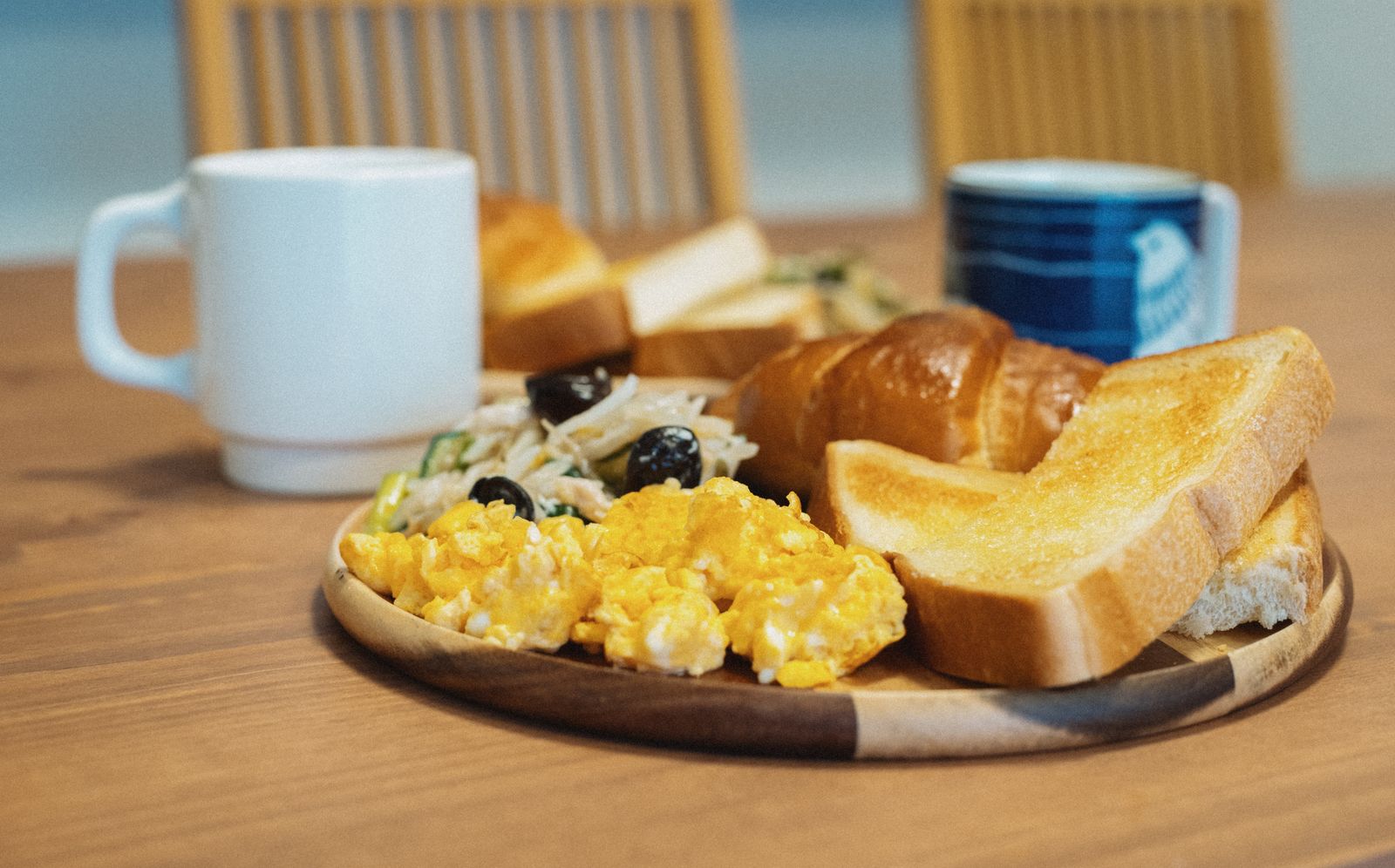
- Mornings are a different menu. Before around 11 a.m., many kissaten run morning service — order a coffee, get toast and an egg thrown in.
- Bring cash. Card acceptance has improved, but the older and better the shop, the likelier it is cash-only.
- Some still allow smoking. Japan restricted indoor smoking in 2020, but small existing eateries could qualify for exemptions, and a lot of old kissaten did. If it matters to you, look for the sign on the door.
- One order per person, then stay as long as you like. That is the deal. Nobody will rush you. In a jazz kissa, also keep your voice down.
What to Drink With It
The house coffee — ブレンド (burendo), "the blend" — is the default, and it is usually a dark, low-acid, unapologetically bitter cup built to stand up to sugar, milk, and ketchup-forward food. It is often brewed by nel drip, the cloth-filter method that gives kissaten coffee its heavy, rounded body, or by siphon if the shop wants a show.
Do not order a flat white. Order the blend, and order it black at least once.
Bring It Home
The food is hard to reproduce without a Japanese grocery store. The coffee is not. If the cup is the part you want to take home, start with our guide to Japanese pour over coffee — the technique, the gear, and why it tastes the way it does.
FAQ
Is kissaten food actually good, or is it just nostalgia?
Both, honestly. These are simple dishes executed by someone who has made them ten thousand times. The napolitan at a good kissaten is genuinely excellent; the napolitan at a mediocre one is ketchup spaghetti.
Are kissaten vegetarian-friendly?
Not especially. Most savory items include ham, bacon, or sausage. Tamago sando and pizza toast without ham are your safest asks, though many kitchens are not set up to modify orders.
What is the difference between a kissaten and a café in Japan?
Roughly: a kissaten is older, quieter, usually owner-run, and serves this menu. A modern kafe is more likely to have specialty coffee, oat milk, and Wi-Fi. There used to be a legal difference too — Japan's food sanitation law had a separate kissaten license that allowed drinks and light food but not full cooking or alcohol. That category was abolished on June 1, 2021, so today the distinction is cultural rather than regulatory.
Can I find these dishes outside Japan?
Napolitan and tamago sando turn up at Japanese cafés in major US cities. Pizza toast and pudding à la mode are much rarer, and cream soda essentially requires a Japanese melon soda supply.