How to Order Coffee in Japan: A Café Cheat Sheet for First-Timers
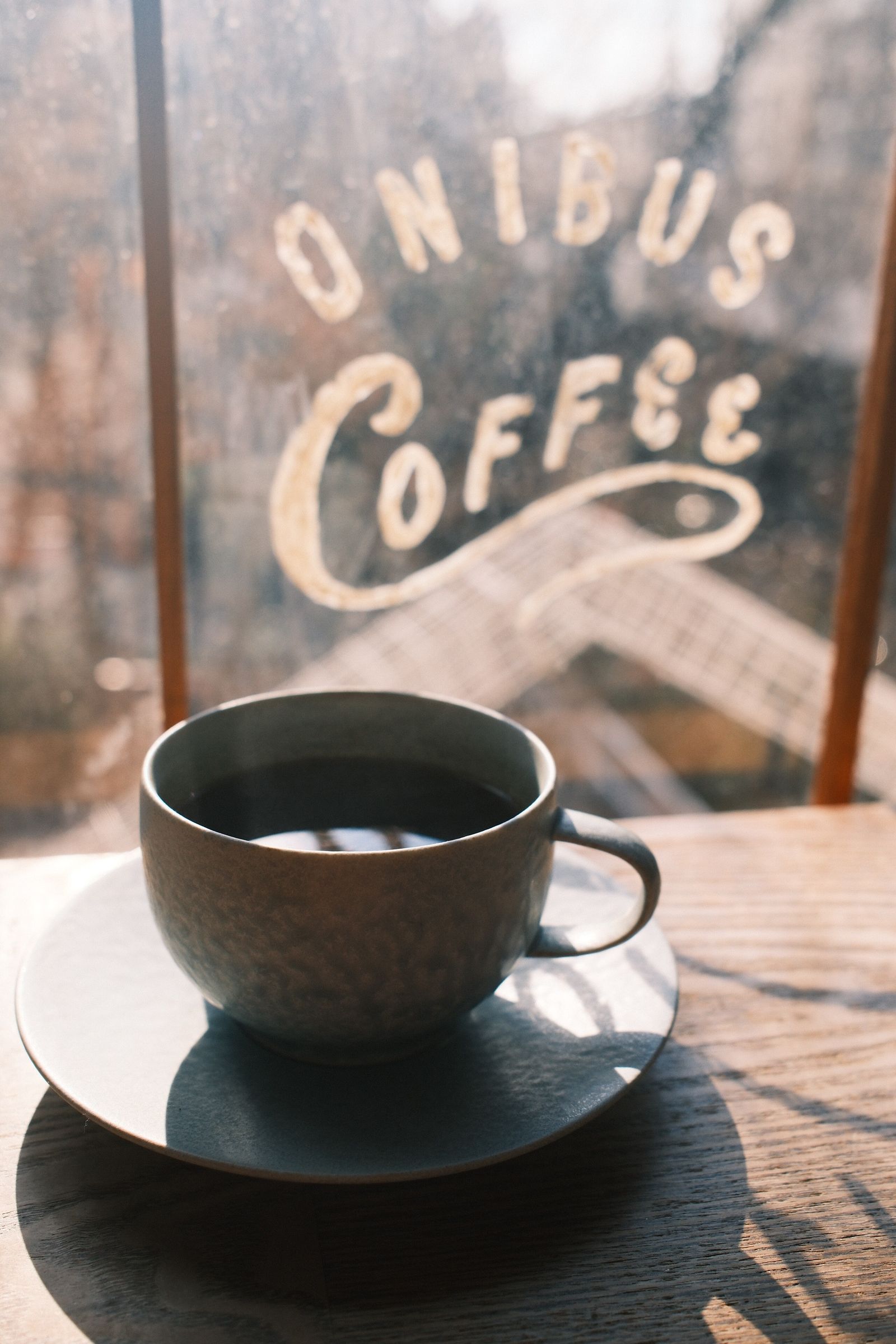
You've found the place. A narrow door, a hand-lettered sign, the smell of dark roast leaking onto the sidewalk. And then you freeze, because you have no idea what happens next. Do you seat yourself? Order at the counter? Is there a menu in English? Do you tip?
Here's the short version: say "burendo," sit where they put you, and take the little paper slip to the register on your way out. That covers most of it. Everything below is the longer version — the words worth knowing, the four kinds of coffee shop you'll run into, and the handful of things that genuinely surprise American visitors. None of it is hard. It's just different enough to be worth reading on the plane.
First, Know Which Kind of Café You've Walked Into
Ordering in Japan isn't one procedure — it's four, and which one applies depends entirely on the type of shop. Figure this out from the doorway and the rest follows.
The kissaten (喫茶店). The traditional coffee house: dark wood, low light, an owner behind the counter who has been making the same cup for thirty years. Table service, no rush, usually a single menu of blend coffee and a short food list. If you want the full story of these places, we wrote one: What Is a Kissaten?. A subgenre worth seeking out is the jazz kissa — a listening room built around a record collection and a very serious pair of speakers.
The chain café. Doutor, Tully's, Starbucks, Komeda's Coffee. Bright, fast, English menus more often than not. Two different systems live here, and we'll separate them below.
The specialty roaster. Third-wave shops in Tokyo, Kyoto, Fukuoka and beyond — pour-over bars, single origins, a scale on the counter. If you've ordered coffee in Portland or Brooklyn, you already know how this works.
The convenience store. Genuinely good coffee for a dollar or two, available on nearly every corner, around the clock. Do not skip this.
The Handful of Words That Actually Matter
You do not need Japanese to drink coffee in Japan. You need about eight words. Staff will meet you more than halfway, and pointing at a menu is a complete sentence.
| Japanese | Romaji | What it means |
|---|---|---|
| コーヒー / 珈琲 | kōhī | Coffee. Say it "koh-hee." The kanji 珈琲 is the old-fashioned spelling you'll see on kissaten signs. |
| ブレンド | burendo | The house blend — the default order at a kissaten, usually a dark roast. |
| アメリカン | amerikan | A deliberately milder, thinner cup. |
| ホット / アイス | hotto / aisu | Hot / iced. You'll be asked which. |
| カフェオレ | kafe ōre | Café au lait — coffee with hot milk. |
| お冷 | ohiya | The glass of cold water that arrives free. |
| おしぼり | oshibori | The damp hand towel that arrives free. |
| お会計 | okaikei | The check. |
Four phrases will carry you through almost any shop:
- "Sumimasen" (su-mi-ma-sen) — "Excuse me." This is how you get a server's attention. Say it at conversational volume; you don't need to raise your hand and shout.
- "Burendo o hitotsu, onegaishimasu" — "One blend, please."
- "Hotto de" / "Aisu de" — "Hot" / "Iced," in answer to the question you'll be asked.
- "Gochisōsama deshita" (go-chi-sō-sa-ma de-shi-ta) — roughly "thank you for the meal," said on your way out. Optional, always appreciated.
One note on amerikan: shops disagree about what it means. At some it's a lighter roast; at others it's the same blend brewed weaker. Either way, you're asking for a gentler cup than the house standard.
Ordering at a Kissaten, Step by Step
This is the one that feels most foreign, so here it is in order.
- Wait just inside the door. Someone will say irasshaimase (welcome) and either point you to a seat or ask how many people. Don't seat yourself unless the room is clearly self-serve.
- Water and a towel arrive. Unasked, free, and not a bill you're running up. Use the towel on your hands, not your face.
- Look at the menu, then say "sumimasen." In a kissaten nobody hovers. The server won't come back until you signal — that's politeness, not neglect.
- Order the blend. "Burendo o hitotsu, onegaishimasu." If you want something else, pointing works perfectly.
- A paper slip lands on your table. This is the denpyō — your check. It stays there until you leave. Don't be alarmed; it isn't a hint to go.
The food menu is worth a look while you wait. Kissaten kitchens have their own canon — thick-cut sandwiches, curry rice, spaghetti made in a skillet — which we covered in kissaten food. Some shops also brew to order at the table with a siphon, which is worth ordering purely as theater.
At a Counter-Service Chain
Doutor, Tully's and Starbucks run on counter service: order and pay at the register first, take your cup, find your own seat. It's the American model and it needs no translation. Doutor in particular is the cheap, fast, everywhere option — the Japanese equivalent of grabbing a coffee at a deli, and one of the few places set up for takeout.
At Komeda's Coffee
Komeda's is the exception among the big chains: full table service, an oshibori with every order, and — at most branches — a button on the table to call your server. Press it. That's what it's for, and it saves you the sumimasen. Komeda is also the easiest place in Japan to try morning service, the custom where a drink ordered before 11 a.m. comes with toast attached.
At a Convenience Store
This one trips people up because there's a machine involved.
At 7-Eleven and FamilyMart, you pay first. Tell the cashier what size you want — holding up a finger and pointing at the machine works fine — and they'll hand you an empty cup. Take it to the machine, set it inside, close the lid, press the button matching your size, and wait. At Lawson, staff generally handle the whole thing at the counter: you order, they hand you the finished drink.
Sizes run roughly small to large, and the buttons are usually marked with icons as well as Japanese. Iced coffee works the same way, except what you're buying is a sealed cup of ice from the freezer case, which you take to the register and then to the machine. And if even that is too much interaction, every store has a wall of canned coffee, hot or cold, for less.
What Arrives Without You Asking For It
Three things you get for free, and one you don't.
Water. A glass of cold water comes with your seat, and it gets refilled without asking. It's never on the bill.
The towel. The oshibori — hot in winter, chilled in summer — is for your hands before you eat.
Zero pressure to leave. Nobody drops the check to move you along, because the check was already dropped. In a kissaten, a single cup can legitimately buy you an hour.
But not refills. This is the one that catches Americans off guard: bottomless coffee is not the norm. A second cup is a second cup, and you'll be charged for it. Some shops offer a discounted okawari (refill) — a nice surprise when it happens, not something to count on.
And there is no tipping, anywhere, ever. Not at cafés, not at restaurants, not in taxis. Leaving money on the table doesn't read as generous; it reads as forgotten cash, and a server may well follow you out to return it. Say gochisōsama deshita on the way out instead. It lands better than a tip would.
Paying: Look for the Slip
You do not pay at your table. You take the denpyō — that paper slip — to the register by the door, and pay there. If there's no slip, just go to the register and say "okaikei onegaishimasu."
Two details worth knowing:
- There's often a small tray at the register. Put your cash or card on the tray rather than into the cashier's hand. It's the standard way money changes hands in Japan, and using it marks you as someone paying attention.
- Carry cash anyway. Japan has moved fast on cashless payment — well over half of consumer spending now goes through cards and QR-code apps, and in cities, chains and convenience stores take plastic without exception. But the exact places you're most likely to want, the tiny owner-run kissaten that's been open since 1974, are also the most likely to be cash-only. A few thousand yen in your pocket solves this permanently.
Five Things That Surprise American Visitors
1. Some old coffee houses still allow smoking. Japan's revised Health Promotion Act, in force since April 2020, banned indoor smoking in most public places — but carved out an exemption for small food and drink businesses that were already operating, roughly those under about 1,000 square feet of seating or below a capital threshold. That describes an awful lot of classic kissaten. Shops are required to post signage at the entrance, so check the door before you commit, and note that smoking-permitted areas are off-limits to anyone under 20.
2. The room is quieter than you expect. Not silent, but conversation runs low, and taking phone calls indoors is broadly avoided. In a jazz kissa the expectation is stricter still — some are explicitly for listening, not talking.
3. Cups are smaller. A kissaten "coffee" is a modest ceramic cup of concentrated dark roast, not a 16-ounce travel mug. It's meant to be sat with, not carried.
4. Dark roast is the default. The house blend at a traditional shop leans deep, bittersweet and full-bodied — a style that goes back decades and reaches its peak in nel drip, the cloth-filter method that produces an almost syrupy cup. If you want a bright Ethiopian, go to a specialty roaster; that's what they're for.
5. Laptops are not universally welcome. Chains are fine with it. Small kissaten frequently are not, and some post signs saying so. When in doubt, read the room: if nobody else has a screen open, don't be the first.
Can't Get on a Plane Right Now?
The good news is that the cup itself travels better than the room does. The blend-coffee style — dark roast, hand-poured, unhurried — is entirely reproducible at home, and it's most of what makes a kissaten cup taste the way it does. Our guide to Japanese pour-over coffee walks through the method from the beginning.
Quick Answers
Do I need to speak Japanese to order coffee in Japan?
No. Eight words and a pointed finger will get you a good cup anywhere in the country. Staff are used to visitors, and many menus have photos.
Do you tip at cafés in Japan?
Never. There's no tipping culture in Japan, and attempting it usually creates confusion rather than goodwill.
What is "blend coffee"?
Burendo is the house blend — the shop's own signature roast, typically dark and full-bodied. Ordering it is the default move at a kissaten, and it's the cup the owner is most proud of.
Can I sit anywhere I want?
In a kissaten or at Komeda's, wait to be seated. At Doutor, Starbucks and other counter-service chains, seat yourself after ordering.