Japanese Coffee Filters: Hario vs. Kalita vs. Cafec
Some links below are affiliate links. We may earn a commission at no cost to you. As an Amazon Associate we earn from qualifying purchases.
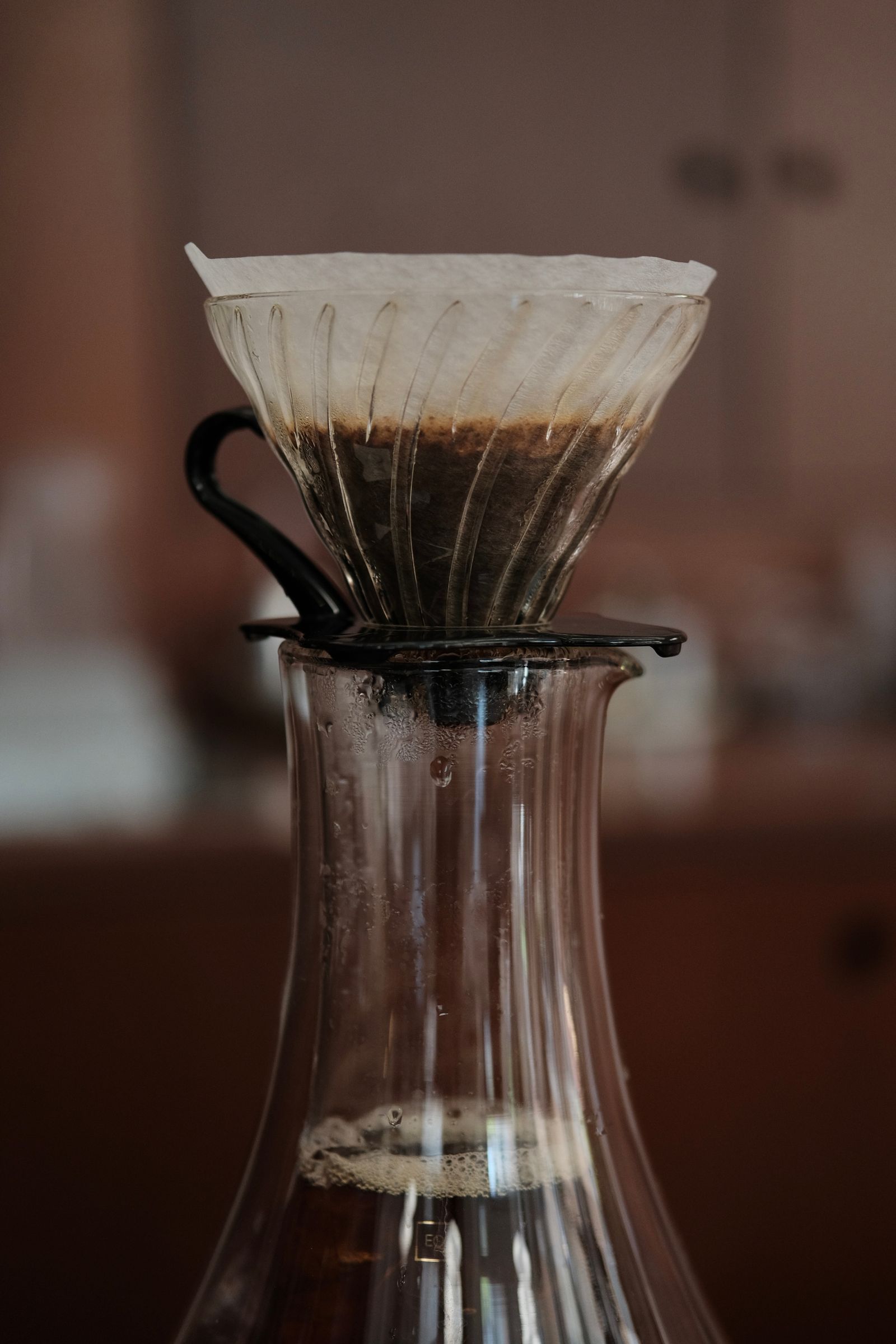
Filter paper is the cheapest variable in your setup and the one people think about least. A hundred sheets cost less than a bag of coffee and get treated like napkins — grab whatever's on the shelf, move on.
That's a mistake worth about as much as a grinder upgrade, for a fraction of the price. Paper decides how fast water leaves the bed, how much of the coffee's oil and fine particulate reaches the cup, and — if you get it wrong — whether your brew tastes faintly of a cardboard box.
The short answers: the default is Hario's tabbed white V60 paper. If your brews stall, try Cafec Abaca+. If you brew flat-bottom, Kalita Wave 155 or 185. If you want to actually understand what paper does, buy Cafec's four-pack assortment and taste the difference in one morning.
The same disclosure we make in every gear piece: we don't run controlled lab tests on paper. What follows is manufacturers' published specs, the findings of reviewers who have run these side by side — flagged where they disagree, which they do — and the ordinary advantage of being in Japan, where all three brands sit on a normal shelf rather than arriving by import.
Still choosing the dripper itself? Start with the best Japanese pour-over drippers, or the complete guide to Japanese pour over.
Our Picks at a Glance
| Filter | Best for | Shape | Material | Bleaching | Fits |
|---|---|---|---|---|---|
| Hario V60 Tabbed, White (VCF-01/02-100W) | Best Overall | Cone, 60° | Wood pulp | Oxygen-bleached | V60 01/02/03, Origami, most cones |
| Hario V60 Misarashi, Natural Brown (VCF-02-100M) | Best for a Fuller Cup | Cone, 60° | Wood pulp | Unbleached | Same as above |
| Cafec Abaca (AC1/AC4-100W) | Best for Brews That Stall | Cone | Abaca (Manila hemp) + wood pulp | Bleached | V60 01/02, Flower Dripper, Origami |
| Cafec Abaca+ (APC1/APC4-100W) | Best Upgrade | Cone + trapezoid | Abaca, FSC-certified | Bleached | V60, Flower Dripper, Melitta-style 101/102 |
| Cafec Roast-Grade TH-1 / TH-2 / TH-3 | Best for Dialing In | Cone | Wood pulp | Bleached | V60 01/02, Flower Dripper |
| Kalita Wave 155 / 185 | Best Flat-Bottom | Flat bottom, 20 waves | Wood pulp | White is bleached; a natural brown is also sold | Kalita Wave; 185 also fits Origami M |
Specs are the manufacturers' published figures. Where a company doesn't publish a number, we've left it out rather than guessed.
What Paper Actually Changes
Shape decides the coffee bed
A cone stacks the grounds into a deep cylinder-and-point. Water converges toward the middle, travels a long path, and — because the bed is deep — small errors in your pour compound. That's the V60 bargain: maximum control, minimum forgiveness.
A flat bottom spreads the same dose into a shallow disc. Water passes through less coffee, more evenly, with less of it channeling down one side. You lose some of the ceiling; you also lose most of the floor. And the paper is what enforces it: put a cone filter in a flat-bottom dripper and you've built a cone.
Thickness and crepe decide flow
Two things in the paper itself govern drawdown speed.
Thickness. Thicker paper holds more water, drains slower, and absorbs more of the brew before it reaches your cup. Cafec is the only one of the three that publishes actual numbers, and they're worth seeing because the spread is larger than you'd guess: 0.15 mm for its light-roast paper against 0.28 mm for its medium-dark. That's nearly double.
Crepe. Run your finger over a filter and you'll feel a fine texture. That's crepe — a deliberate crinkle that holds the paper a hair off the dripper wall so water has somewhere to go. Cafec varies it on purpose: one-sided crepe on the light-roast paper, two-sided and taller on the medium-dark, two-sided and lower on the dark. Hario's ribs do a related job from the dripper side, which is why V60 paper can be thin and still not seal to the cone.
If your brews routinely stall — water pooling, drawdown creeping past four minutes — the paper is one of the two suspects. The other is grind, and it's usually the other one. See common pour over mistakes.
Bleached vs. unbleached
White filters are bleached; brown ones aren't. In Japan the unbleached version has its own word on the package — misarashi (見晒し), literally "unbleached."
The white paper you'll buy from any of these brands is oxygen-bleached, not chlorine-bleached: whitened with hydrogen peroxide and ozone rather than chlorine compounds, so it doesn't produce dioxins or organochlorines. The old worry about bleached filters was about a process the industry left behind.
Unbleached paper skips the whitening step, which leaves more lignin — the woody polymer in pulp — in the sheet. Lignin is what a papery, cardboard-y cup tastes like. It's not a defect you're stuck with; it's a rinse away. But it does mean brown filters ask more of you than white ones.
The Filters
Hario V60 Tabbed, White — Best Overall
The default, and the right answer unless you have a specific reason otherwise.
Oxygen-bleached wood pulp, made in Japan, cut for the 60-degree cone Hario designed it around, and sold in 40- and 100-sheet packs as VCF-01-100W (one to two cups) or VCF-02-100W (one to four). The code is worth learning: VCF, then the dripper size, then the count, then W for white or M for misarashi. The tab is the small paper flap on the seam — pull it and one sheet separates instead of three.
The paper is thin, which is the point: it drains quickly and stays out of the way, letting your pour rather than the filter set the pace. It's also the paper our V60 recipe was written against, and the safest assumption behind any V60 recipe you'll find online.
One buying note that matters more than it should: tabbed and untabbed V60 filters both circulate, in near-identical packaging. At least one reviewer who has weighed and timed both reports the untabbed sheets run noticeably heavier and drain roughly 15–25 seconds slower on the same recipe. Both are genuine Hario product — the company has made this paper at more than one plant over the years. If you're following a recipe with a target drawdown time, look for the tab.
The honest downside: nothing about it is exciting, and thin paper is less forgiving of a fines-heavy grind.
Check the Hario V60 Tabbed Paper Filters, White on Amazon
Hario V60 Misarashi, Natural Brown — Best for a Fuller Cup
Same cone, unbleached paper, more work and a rounder cup.
Identical dimensions and fit; the difference is entirely in the sheet. Sold as VCF-01-100M and VCF-02-100M.
Drinkers who prefer it describe more body and a little more sweetness. Drinkers who don't describe cardboard, and they're both right: the lignin that gives brown paper its color is the same compound that tastes like a box. Rinse it properly and the complaint goes away. Rinse it lazily and it doesn't.
Who it's for: people brewing medium and darker roasts who want weight rather than clarity — and who will actually rinse.
Check the Hario V60 Misarashi Paper Filters, Natural Brown on Amazon
Cafec Abaca — Best for Brews That Stall
The Japanese filter almost no American has heard of, from the company that's been making cone paper the longest.
Cafec is the consumer brand of Sanyo Sangyo, founded in Beppu, Ōita Prefecture in 1973, which has made paper filters ever since and says it developed the world's first cone-shaped paper filter. That's the company's own account, not an independently verified one — paper filtration itself dates to Melitta Bentz in 1908, in a flat-bottom form — but the length of the track record isn't in dispute. The Cafec brand name only launched in 2016, which is why the paper looks new abroad and doesn't feel new here.
The Abaca filter blends wood pulp with abaca, a fiber from a banana relative grown mostly in the Philippines. It's sold as "Manila hemp" — a trade name, not a botanical one; there's no hemp in it. What there is, is unusual tensile strength from a plant that regrows in a couple of years rather than a couple of decades. Cafec's pitch is that the resulting sheet passes water faster than conventional paper.
The honest version of that flow claim: reviewers disagree. Some find the Abaca appreciably quicker than a tabbed Hario sheet; at least one side-by-side found a Japanese-made untabbed Hario filter running about thirty seconds faster than the Abaca on an identical recipe. Treat "faster" as a plausible tendency rather than a spec you can build a recipe on. What's not in dispute is that it's well made, consistent sheet to sheet, and worth a try when a brew keeps choking.
Sizes are Cup1 (fits V60 01) and Cup4 (fits V60 02), so the labeling doesn't match Hario's and you have to translate.
Check the Cafec Abaca Cone Paper Filter on Amazon
Cafec Abaca+ — Best Upgrade
The Abaca, refined, and the one to buy if you're only buying one Cafec paper.
Abaca+ is FSC-certified and made with what Cafec calls a Fine-Grained process: the crepe is spaced more narrowly, which increases surface area and, per the company, moves water faster still. It's also the only Cafec line offered in trapezoid 101 and 102 sizes, so Melitta-style dripper owners aren't locked out.
Same caveat as above on the speed claim — it's the manufacturer's. What you can rely on is the paper quality and the certification.
Check the Cafec Abaca+ Paper Filter on Amazon
Cafec Roast-Grade Papers (TH-1 / TH-2 / TH-3) — Best for Dialing In
Three papers engineered to different flow rates, sorted by how dark your beans are. This is the most Japanese idea in the whole category.
Rather than sell one filter and tell you to adjust your grind, Cafec changed the papermaking itself — thickness and drying process — to build three different flow rates:
| Paper | For | Thickness | Crepe | Suggested water temp |
|---|---|---|---|---|
| TH-1 (formerly T-92, "Light Roast") | Light roasts — clarity, aroma | 0.15 mm | One-sided, high density | 198°F / 92°C |
| TH-2 (formerly T-83, "Dark Roast") | Dark roasts — body, sweetness | 0.22 mm | Two-sided, low | 181°F / 83°C |
| TH-3 (formerly T-90, "Medium-Dark") | Medium to medium-dark — balance | 0.28 mm | Two-sided, tall | 194°F / 90°C |
Note the renaming, and what it reveals. Since 2024 Cafec has been shifting these away from roast-level names toward the TH designation — and TH ranks by thickness, not by roast. Read the table in order and the surprise lands: the dark-roast paper is thinner than the medium-dark one. The heaviest sheet in the line isn't for the darkest coffee. Stop reading these as light/medium/dark and start reading them as thin/medium/thick, and they get much easier to choose between. Both naming systems are on shelves right now.
The cheap way in is the 4P assortment pack, which puts all three plus an Abaca+ in one box. Brew the same coffee four times through four papers on one Saturday and you'll learn more about filters than any article can teach you — including, possibly, that you can't tell them apart, which is also worth knowing.
Check the Cafec 4P Paper Filter Assortment on Amazon
Kalita Wave 155 / 185 — Best Flat-Bottom
The most forgiving paper on this list, because of what its shape does to the bed.
The Wave filter is a flat-bottom cup with twenty pleats — the waves — pressed into its wall. They hold the paper off the dripper so contact between filter and metal is minimal and water can move around the whole circumference instead of hugging one side. Thick, made in Japan, white as standard, with a natural brown version also sold.
Two sizes, and the numbers are the flat diameter in millimeters, not cup counts: 155 for one to two cups, 185 for two to four. They aren't interchangeable — a 185 in a 155 dripper crumples.
Thick paper plus a shallow bed punishes a sloppy pour the least, which is why it turns up in cafés training new staff — see our Kalita Wave recipe. If the flat bottom appeals because you like a heavier, softer cup, note that the older Japanese route to that texture was cloth, not thick paper: nel drip.
Check the Kalita Wave Paper Filter 155 on Amazon
Check the Kalita Wave Paper Filter 185 on Amazon
Which Filter Fits Which Dripper
| Dripper | Filter to buy |
|---|---|
| Hario V60 01 | V60 01 cone, or Cafec Cup1 |
| Hario V60 02 | V60 02 cone, or Cafec Cup4 |
| Hario V60 03 | V60 03 cone only |
| Kalita Wave 155 | Kalita Wave 155 only |
| Kalita Wave 185 | Kalita Wave 185 only |
| Origami M | Either — a V60 02 cone or a Kalita Wave 185 |
| Cafec Flower Dripper | Any Cafec cone (Cup1 / Cup4); V60 cones also fit |
| Melitta-style trapezoid | Trapezoid 101 / 102 — Cafec Abaca+ makes these |
Two rules fall out of that. Cone paper and trapezoid paper are not substitutes — a V60 sheet in a Melitta-style dripper folds wrong and channels. And the Origami is the interesting case: because it takes both, the same dripper gives you a cleaner, brighter cup with a cone and a sweeter, more structured one with a Wave. One brewer, two cups, decided by which box you open — we have recipes for both.
Unsure which V60 size you own or should buy? V60 01 vs. 02.
Do You Need to Rinse?
Rinsing does two separate jobs, and conflating them is why the advice online contradicts itself.
Job one: washing out paper taste. Real, and mostly a brown-filter problem. Blind tastings have repeatedly failed to find a difference between rinsed and unrinsed oxygen-bleached paper, and the working conclusion in specialty coffee is that a pre-rinse pushes any cardboard note below most people's detection threshold. Unbleached paper carries far more lignin, so the rinse does far more work.
Job two: preheating. The same water heats the dripper and the server, which is worth real degrees on the first pour — especially with ceramic, a heat sink until it isn't.
So: white paper, a quick rinse. Brown paper, a generous one. Either way, dump the rinse water before you add coffee. And if you're brewing like a Japanese café, where the pours are slow and total contact time is long, the preheat matters more, not less.
What We'd Actually Buy
If you buy one thing: Hario V60 tabbed white, in the size that matches your dripper. It's the reference paper, it's cheap, and almost no recipe you find online is calibrated against anything else.
If you buy two: add the Cafec 4P assortment and spend a morning on it. It's the fastest education in this category, and it costs about what a single bag of coffee does.
If you brew flat-bottom: Kalita Wave, in the size printed on your dripper, and stop thinking about it.
And if the cup still isn't right, the paper probably wasn't the problem. Grind consistency moves the needle harder than any filter on this list — see the best manual grinders for pour over — and after that, it's your pour.